
Towing a caravan opens the door to freedom and adventure, but safety always comes first. Before you hitch up and hit the road, taking time to properly prepare your caravan can prevent accidents, breakdowns, and costly damage.
How do I get our caravan ready for a journey?
Whether you’re heading out for a weekend escape or a long touring holiday, a simple checklist will help ensure your caravan is ready for the journey.
Our Pre-tow Checklist has changed and developed over the years. This list is provided in good faith and is not a substitute for professional advice. Your use of this list, this site and your reliance on any information on the site is solely at your own risk.
Our Pre-Tow Checklist
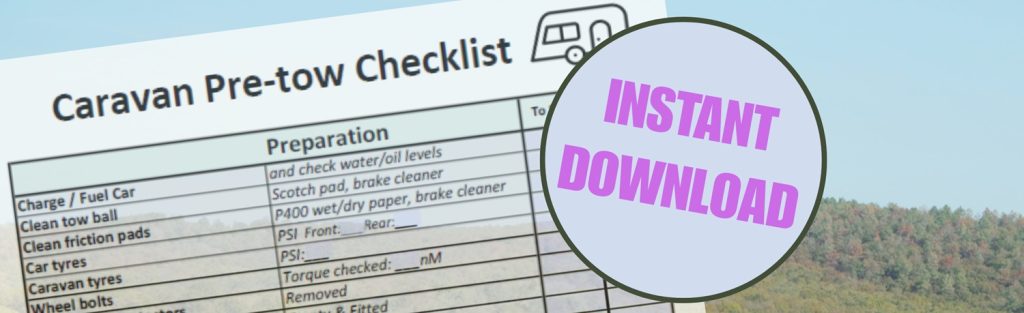
What follows is some more detail on that which is included in our Pre-Tow Checlist. This is not an exhaustive list and you should always seek advice of professionals. This post contains affiliate links. As an Amazon Associate, we earn commission from qualifying purchases. We are in no way affiliated with any of the manufacturers of these items. The price you pay does not change.
1. Check Your Tow Vehicle Compatibility
Before towing, confirm that your car is capable of safely towing your caravan. Check the vehicle’s towing capacity in the manufacturer’s handbook and ensure it exceeds the caravan’s fully loaded weight (MTPLM). Overloading your vehicle can lead to poor handling and increased braking distances.
Also check that:
- Your tow bar is securely fitted and rated for your caravan.
- The electrical connection for lights and indicators works correctly.
- Your mirrors provide adequate rear visibility (towing mirrors are usually required).
2. Inspect Tyres and Wheel Nuts
Tyres are one of the most important safety checks before towing.
Make sure to:
- Inspect tyres for cracks, bulges, or excessive wear.
- Check tyre pressures when cold and inflate to the manufacturer’s recommended level.
- Tighten wheel nuts to the correct torque settings. Click here for the torque wrench we use.
Caravan tyres can degrade over time even if tread looks good, so replacing tyres every 5–7 years is recommended.
3. Secure the Hitch and Safety Equipment
Proper hitching is essential.
Follow these steps:
- Lower the caravan hitch onto the tow ball.
- Ensure the hitch locks securely into place.
- Attach the breakaway cable to the correct point on the tow bar. Click here for the spare breakaway cable we always carry.
- Raise the jockey wheel fully and secure it.
- Release the handbrake once ready to move.
Give the hitch a final visual and physical check before driving away.
4. Test All Lights and Indicators
Plug in the caravan’s electrical connector and test:
- Brake lights
- Indicators
- Tail lights
- Hazard lights
- Reverse lights (if fitted)
Having someone stand behind the caravan while you test the lights makes this much easier. This Towing Electrics tester is very handy for fault-finding any isssues.
5. Balance and Secure the Load
Improper weight distribution is a major cause of caravan instability and snaking.
Best practices include:
- Keep heavy items low and close to the axle.
- Maintain the correct nose weight (usually 5–7% of the caravan’s total weight).
- Secure all loose items inside cupboards and storage compartments.
Before departure, close and lock all cupboards, drawers, and doors.
6. Retract and Secure External Components
Walk around the caravan and ensure all external elements are secured.
Check that:
- Corner steadies are fully raised.
- Steps are folded away.
- Awnings are stowed.
- Roof lights, windows, and vents are closed.
- TV aerial and satellite dishes are lowered.
This quick walkaround prevents damage while driving.
7. Turn Off Gas and Disconnect Utilities
For safety during travel:
- Turn off the gas supply at the cylinder.
- Disconnect mains electricity.
- Empty water tanks, flush tanks and any wastewater containers.
- Secure the battery compartment.
Never travel with appliances running on gas unless specifically designed for it.
8. Check Brakes and Handbrake Operation
Before setting off, ensure the caravan’s braking system is working correctly.
- Release the handbrake fully before driving.
- Test the brakes gently at low speed shortly after moving off.
- Listen for unusual noises or resistance.
If anything feels unusual, stop and inspect before continuing.
9. Final Walkaround Check
Before you leave, perform one last walkaround of the caravan and tow vehicle. Ask yourself:
- Are all doors and lockers closed and locked?
- Are the lights working?
- Is the hitch secure?
- Are the tyres properly inflated?
This final check only takes a minute but can prevent major problems later.
10. Drive Smoothly and Allow Extra Distance
Once on the road, remember that towing changes how your vehicle handles.
- Accelerate gradually.
- Brake earlier and more gently.
- Take wider turns.
- Keep speeds moderate and legal for towing.
A relaxed driving style will keep both you and your caravan safe.
Final Thoughts
Preparing your caravan before towing is all about safety and peace of mind. By following a consistent checklist each time you travel, you reduce the chances of mechanical issues and ensure a smoother, more enjoyable trip.
With your caravan properly prepared, all that’s left to do is enjoy the open road and the freedom of exploring new destinations.
We have other Caravan Checklists which you may find helpful.
Pingback: Caravan Checklists - Baker Days On Tour